
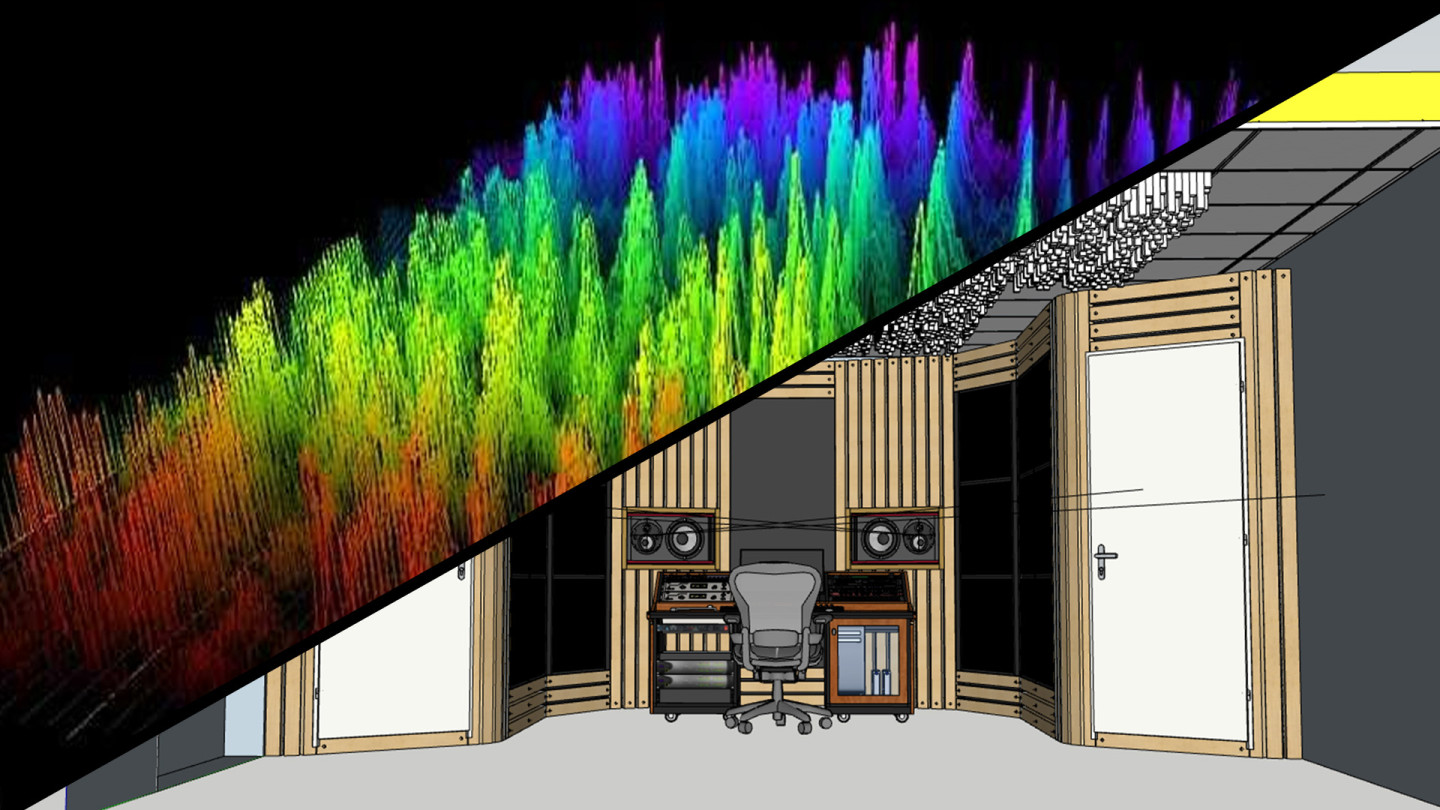
Having excellent studio monitors, a great sound card, and a wide range of high-end equipment and plugins is certainly more than a good starting point for achieving professional-quality sound, but it actually represents only half of the journey required to achieve a high-quality mix.
Acoustic treatment of the room is an absolutely fundamental step to finally mix properly and gain precision in adjustments as well as save time during mixing.
Having excellent studio monitors, a great sound card, and a wide range of high-end equipment and plugins is certainly more than a good starting point for achieving professional-quality sound, but it actually represents only half of the journey required to achieve a high-quality mix.
Acoustic treatment of the room is an absolutely fundamental step to finally mix properly and gain precision in adjustments as well as save time during mixing.
Sound, by its very nature, requires considerable technical knowledge to ensure a reliable final result. The room and its acoustic treatment must actually be considered the most important element of the mixing process, as its influence has a huge impact on our settings. From my experience, I can assure you that as long as the room is not treated, it will be impossible to do precise work.
The goal, just like with studio monitors, is to achieve the most neutral sound possible, the purest. And it is clear that this represents a real challenge.
Here, in this guide, I will focus only on room acoustics (sound treatment) and not soundproofing. Acoustic treatment consists of controlling the quality of sound diffusion, whereas soundproofing consists of reducing this diffusion as much as possible.
Simply put, we treat a room to improve listening inside it, and we soundproof it to prevent that sound from reaching neighbors.
In this guide, I will present my method for treating a room by explaining some theory and, above all, a lot of practical advice. I will introduce the different types of treatment and give you my opinion on the equipment available on the market. And unfortunately, although it does not really please me, I will also have to debunk some absolutely ridiculous myths spread by certain amateurs and even professionals that I have read about on the web or seen in videos on YouTube. Many of these people who give advice about mixing, although I believe they are convinced, do not fully understand acoustic issues and lead you toward ineffective pseudo-solutions that waste your time and money.
Hold on, because this guide is quite extensive. It is based on my experience and my "do-it-yourself" (DIY) approach to acoustic treatment.
The guide should be read in chapter order, which is logical, but particularly essential for this topic given its complexity.
Having excellent studio monitors, a great sound card, and a wide range of high-end equipment and plugins is certainly more than a good starting point for achieving professional-quality sound, but it actually represents only half of the journey required to achieve a high-quality mix.
Acoustic treatment of the room is an absolutely fundamental step to finally mix properly and gain precision in adjustments as well as save time during mixing.
12 other products in the same category:
copy of copy of copy of copy of copy of copy of copy of copy of copy of copy of copy of copy of copy of copy of copy of copy of
View this product
Authorized access
copy of copy of copy of copy of copy of copy of copy of copy of copy of copy of copy of copy of copy of copy of copy of copy of
View this tutorial
Authorized access
copy of copy of copy of copy of copy of copy of copy of copy of copy of copy of copy of copy of copy of copy of copy of copy of
View this tutorial
Authorized access
copy of copy of copy of copy of copy of copy of copy of copy of copy of copy of copy of copy of copy of copy of copy of copy of
View this tutorial
Authorized access
copy of copy of copy of copy of copy of copy of copy of copy of copy of copy of copy of copy of copy of copy of copy of copy of
View this tutorial
Authorized access
DIFFUSER - With Sticks or Wells, which design is the most effective ?
When it comes to diffusers, "experts" generally agree on a preference for well-based designs over stick-based ones. However, my investigations have led me to the conclusion that, depending on the sequence type and implementation constraints, stick-based designs often yield better results when the number of cells is substantial. After selecting the diffusers (generated randomly using the "Mersenne Twister") that exhibit superior characteristics to QRD, PRD, LSD, and PWRD models, in line with the predictions of my analyzer using the "brute force" method, I set out to examine the similarities in their designs to identify the elements necessary for optimal diffusion.
View this tutorial
Authorized access
copy of copy of copy of copy of copy of copy of copy of copy of copy of copy of copy of copy of copy of copy of copy of copy of
View this tutorial
Authorized access
copy of copy of copy of copy of copy of copy of copy of copy of copy of copy of copy of copy of copy of copy of copy of copy of
View this tutorial
Authorized access
copy of copy of copy of copy of copy of copy of copy of copy of copy of copy of copy of copy of copy of copy of copy of copy of
View this tutorial
Authorized access
copy of copy of copy of copy of copy of copy of copy of copy of copy of copy of copy of copy of copy of copy of copy of copy of
View this tutorial
Authorized access
ACOUSTICS 01 - Which measurement microphone to choose?
Let me tell you right away, starting to treat a room without taking acoustic measurements is simply absurd.
Acoustic measurements are ESSENTIAL to understand what is happening in a listening room and are absolutely INDISPENSABLE for defining and choosing the materials needed for acoustic treatment of the room.
Therefore, the first FUNDAMENTAL thing you need to buy to start treating your room is not a bass trap, an acoustic foam kit, or anything else, but indeed a MEASUREMENT MICROPHONE!!!
View this tutorial
Authorized access
copy of copy of copy of copy of copy of copy of copy of copy of copy of copy of copy of copy of copy of copy of copy of copy of
View this tutorial
Reviews (0)